'What's your skin type?' sounds simple until you realize your nose is shiny, your cheeks are dry, and one new product has made your entire face angry.
Skin is more complicated than four neat boxes. Skin type can shift with seasons, hormones, climate, medications and skincare habits. Instead of treating a label as an identity, it is more useful to learn the patterns your skin shows you.
Try this before buying anything
Wash with a gentle cleanser and observe your skin rather than immediately layering products. Does the whole face feel tight? Does shine appear quickly? Are only certain areas oily? Does your skin sting easily? Look for patterns over several days.
If your face feels tight
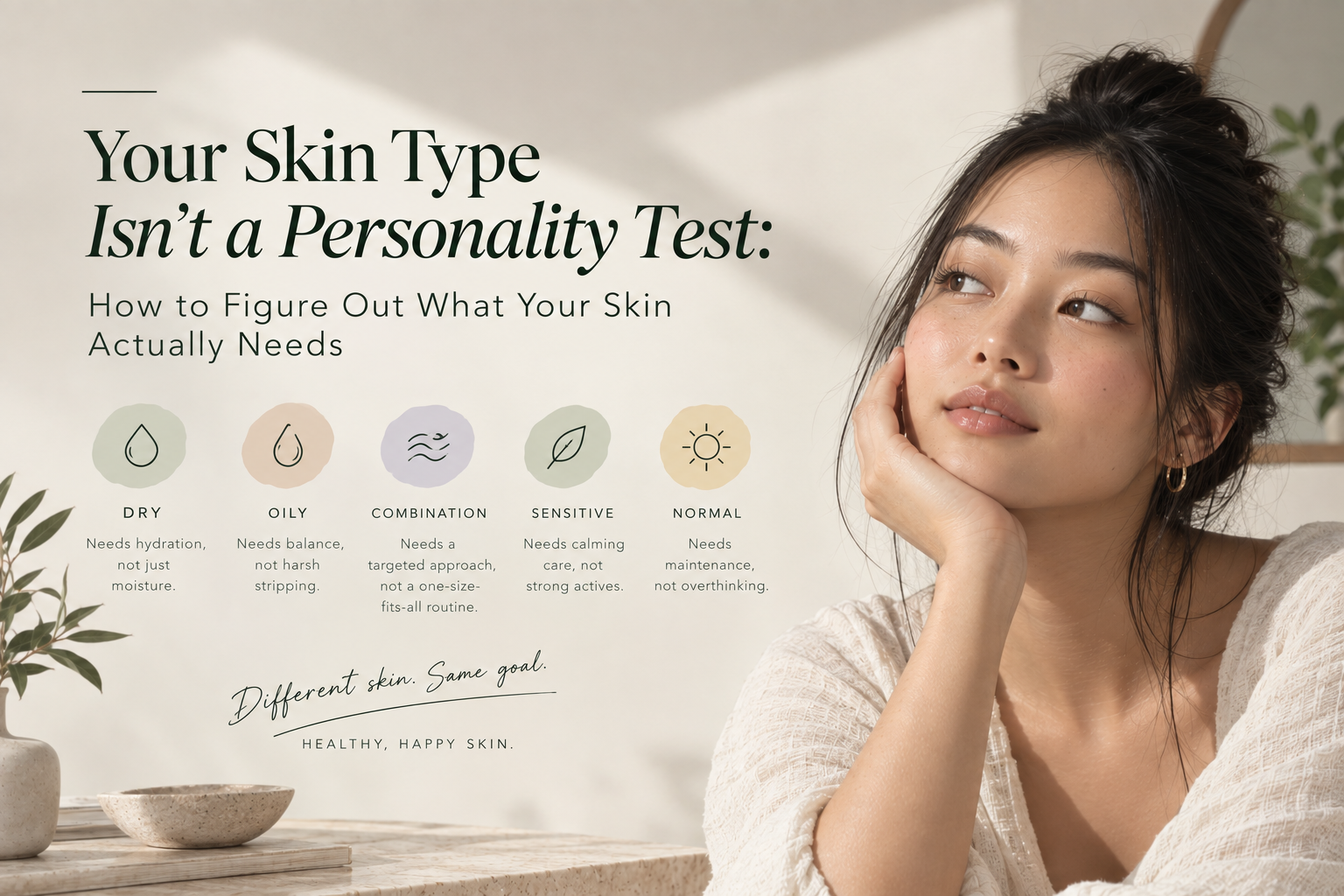
Dry skin often feels rough, tight or flaky. Start with gentle cleansing and a moisturizer that supports the skin barrier. Glycerin and ceramides are common ingredients in products made for dry skin.
If your face gets shiny quickly
Oily skin produces more sebum and may look shiny across the forehead, nose and chin. It does not need to be stripped. Gentle cleansing, a comfortable moisturizer and suitable oil-control ingredients can be enough.
If different areas behave differently
Combination skin commonly means an oilier T-zone with drier or normal cheeks. You do not need two entire routines. Targeted application can be enough.
If almost everything irritates you
Sensitive or reactive skin is about how easily skin becomes uncomfortable, not whether it is oily or dry. Fewer actives, gentle formulas and gradual product introduction may help.
Normal skin still needs care
Normal usually means relatively balanced and comfortable. It does not mean 'perfect' and it certainly does not mean you need to keep adding products.
Skin type is not the same as skin concern
Oily is a skin-type description. Acne is a concern. Pigmentation is a concern. Dehydration can occur with different skin types. You can be oily, sensitive and acne-prone at the same time.
Keep these distinctions in mind:
Oily = skin-type pattern
Acne = skin concern
Dehydration = a condition that can occur with different skin types
Sensitivity = tendency toward irritation
Climate can change the routine
A moisturizer that feels perfect in humid weather may feel too light during a dry winter. Sometimes your environment changes what your skin needs without permanently changing your underlying skin type.
When labels stop being useful
Persistent rashes, painful acne, severe dryness, ongoing burning or unexplained changes deserve professional assessment rather than endless product switching.
Quick reference
What you notice | It may suggest | Starting point |
|---|---|---|
Tight/flaky | Dryness | Gentle cleanser + richer moisturizer |
Shiny across much of face | Oilier skin | Gentle cleanser + lightweight moisturizer |
Oily T-zone, drier cheeks | Combination | Targeted care |
Frequent stinging/redness | Reactive skin | Simplify and choose gentle products |
Mostly comfortable | Balanced/normal | Maintain rather than over-treat |
Keep these in mind
Skin type is not permanent.
Sensitive skin can occur alongside any other skin type.
Acne and pigmentation are concerns, not simply skin types.
FAQs
Can my skin type change?
Yes. Age, seasons, hormones, climate, medications and skincare habits can change how it behaves.
Is oily skin automatically acne-prone?
No. The two can occur together, but they are not the same thing.
Should combination skin use different products?
It can, but it does not have to. Targeted application is often enough.
How do I know if my skin is sensitive?
Frequent stinging, burning, flushing or irritation can be clues; persistent symptoms should be professionally assessed.