
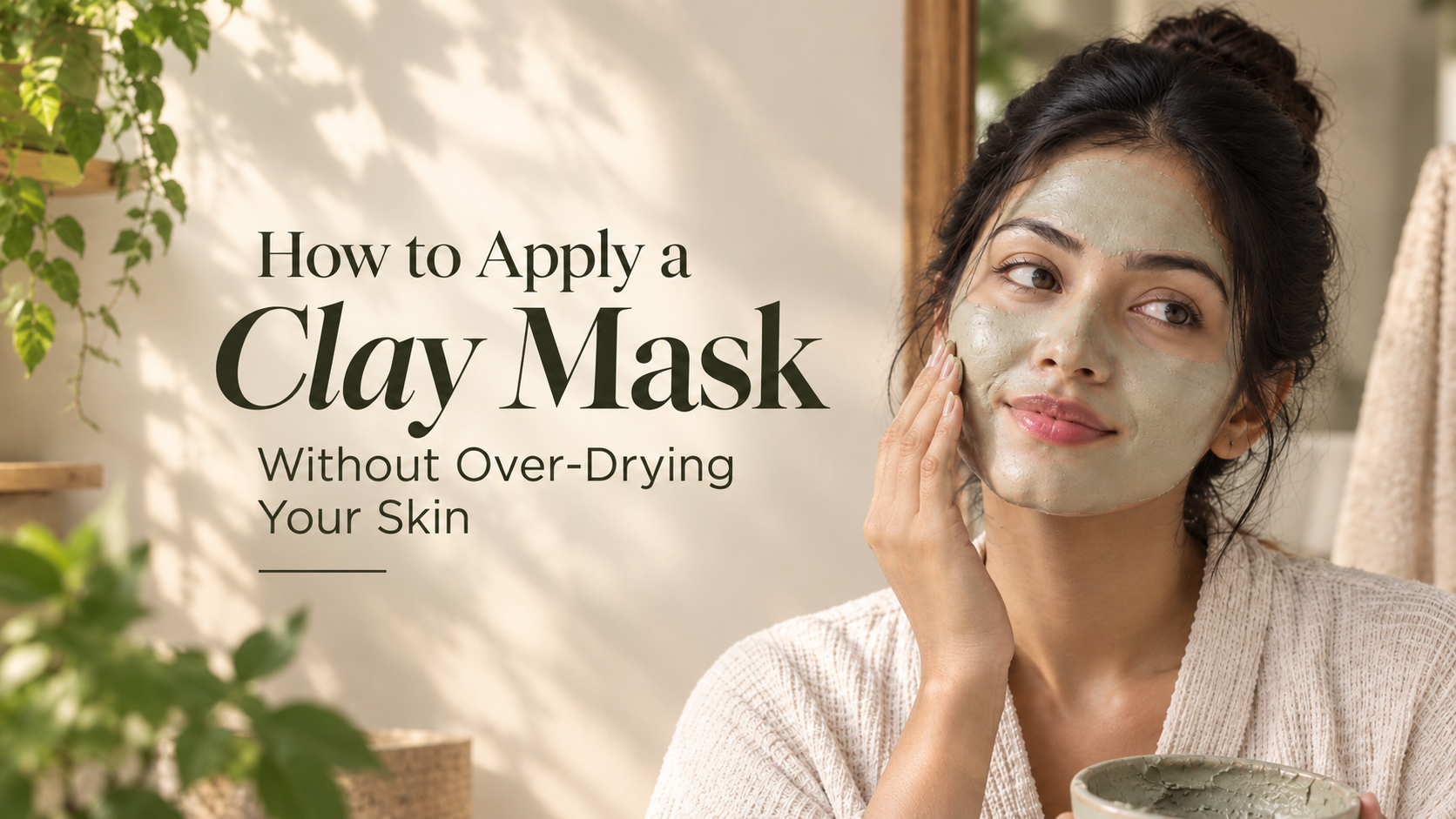
Clay masks are one of those skincare rituals that look almost too simple to get wrong. You put some clay on your face, wait, rinse, and move on. Yet the most common mistakes are surprisingly consistent: using too much product, leaving it on until it cracks, applying it over already-irritated skin, and assuming that a tighter face means a better result.
A clay mask can be a useful cosmetic addition to a routine, particularly when your skin tends to become oily. The trick is to treat it as a short treatment rather than an endurance test.
What is a clay mask actually doing?
Clay is used in skincare because it can absorb oil and interact with surface impurities. This can leave skin looking less shiny and feeling freshly cleansed. The effect is mainly cosmetic and temporary. A clay mask does not permanently shrink pores, cure acne, or replace a treatment recommended for a skin condition.
Choose the clay—and the formula—rather than the marketing
Kaolin is commonly used in gentler masks. Bentonite is more absorbent and is often used for oily skin. French green clay and rhassoul also appear in cleansing products, while pink clay usually describes a blend. The complete formula matters more than the name on the front of the jar.
A quick comparison
Clay | Often chosen for | Keep in mind |
|---|---|---|
Kaolin | Normal/combination | Can still dry skin if overused |
Bentonite | Oily skin | May feel too absorbent for dry skin |
French green | Oily/combination | Formula matters |
Rhassoul | Cleansing/masking | Individual products differ |
Pink clay | Gentler-feeling blends | Color alone does not determine suitability |
The smartest clay-mask trick for combination skin
There is no rule that says the whole face has to be covered. If your forehead, nose and chin are oily but your cheeks feel dry, put the mask only on the oily areas. This is often more comfortable than trying to make one product suit every part of the face.
Before you apply anything
Remove makeup and sunscreen and cleanse gently. Do not scrub your face first just because the mask is coming next. Combining a physical scrub, a strong acid and a clay mask in one session can be unnecessarily irritating.
How to apply it
Use clean fingers or a clean brush and spread a thin, even layer. Keep it away from the immediate eye area, lips, open cuts and severely irritated skin. More product does not automatically mean more benefit.
The 'let it crack' myth
Follow the product's stated contact time. You do not need to wait until the mask becomes completely dry and cracked. If your face feels intensely tight, burns or becomes uncomfortable, rinse it off.
Rinsing is part of the treatment
Use lukewarm water and soften the mask before rubbing. Dried clay around the nose or hairline may need another splash of water rather than harder scrubbing. Pat your skin dry.
What to do after the mask
Moisturize. If your skin feels tight, choose a barrier-supportive moisturizer and avoid piling on another exfoliant immediately. If you masked during the day, sunscreen should be your final daytime step.
How often is reasonable?
Once a week is a practical starting point for many people. Some oily skin types may tolerate twice-weekly use if the product allows it. Dry or reactive skin may need much less frequent use.
The short version
Apply a thin layer.
Follow the label rather than waiting for cracking.
Never use over open or severely irritated skin.
Moisturize afterward.
Stop if there is significant burning, swelling or worsening irritation.
FAQs
Can I use a clay mask every day?
Usually there is no need. Frequent use can contribute to dryness and irritation.
Should I moisturize after clay?
Yes. It is a sensible follow-up, particularly if the mask feels drying.
Will clay permanently remove blackheads?
No. It can reduce surface oil temporarily, but it does not permanently remove blackheads or shrink pores.
Can I use one with acne?
Possibly as an optional cosmetic step if your skin tolerates it, but it is not a complete acne treatment.